
By Bryson Foster | Jan. 14, 2026
Dr. Lee Corder served as a chaplain for the Washington Redskins for over 20 years. Corder has served in multiple capacities over the years and has consistently had God lead him in his ministry.
“I've discovered more often than not, when I've done something and think, ‘boy, that was really good, that really impacted people.’ I hear nothing,” said Corder. “ More often than not, somebody will come up to me a month later, a year later, ten years later, and say, ‘You know, Lee, I remember the time you and I were doing this. or you came to visit me, or you said this.’ I don't remember those things. What that says to me is that you never know how the Holy Spirit's going to use something.”
CEDE SPORTS sat down with Corder to discuss his ministry, his relationship with former Redskins Head Coach Joe Gibbs and tips for chaplains.
CS: Can you describe yourself?
Corder: I'm the son of a Baptist minister and a Navy nurse. I grew up in Roanoke, Virginia, and then moved up to Northern Virginia when I was in junior high.
CS: How did you come to know Christ?
Corder: I grew up in the church, indeed always believed in Jesus, but I went through a crisis in my senior year at university with some depression, and that's where Jesus became real to me in a different way. I appropriated my own faith. I was baptized in the church and went forward, but I think it was in my fourth year at university that He became real to me and I began to grow in my relationship with Him personally.
CS: How long have you worked in chaplaincy?
Corder: I actually worked with the federal government for a couple of years. I was a political science major, then worked in D.C., but got involved as a volunteer leader with Young Life. I went on staff with Young Life, and that's what led me to become a sports chaplain because we got to know Joe Gibbs through his sons, J.D. and Coy, who were involved in Young Life. When Joe needed another chaplain at Redskins Park, he asked me if I would fill in, and I did during training camp. He said, "Will you keep going?" And so I kept going for almost 20 years.
CS: How would you describe your time as the sports chaplain in Washington?
Corder: In D.C., back in the day, even being the Redskins chaplain was a pretty big deal. I had to discipline myself constantly to be aware: this is about Jesus, not me. I'm here to serve. That was really crucial. I'm grateful that I had friends challenging me on that regularly. Having a little group of friends, both family and peers, was invaluable and kept me on track.
CS: How would you describe your relationship with Joe Gibbs?
Corder: Joe is a friend. I worked for him, but over the years, he became a friend and a man I have great respect for. His heart is to honor Jesus and to care for people. We were in the Super Bowl in 1992 in Minneapolis. We were playing the Buffalo Bills. The night before the game, I was walking down the hallway to set up for chapel. He decided he wanted chapel open for families, so we had about 500 people coming. The team was coming out of walk-through. It's the last thing they do, practice-wise, before a game. They were in ballroom 1, and we were going up to ballroom 2, and as I'm walking up the hallway, here comes Coach Gibbs out of the practice. He says, ‘Hey Lee, come here a second.’ He's very intense when he's focused on something. He said, ‘You make sure that tonight at chapel, for people to have a chance to pray and give their lives to Jesus. Make sure of that, will you?’ I remember my first thought being, ‘Well, oh, my gosh, you've got a Super Bowl tomorrow, buddy. You've got to focus.’ Then I remember thinking, ‘Wow, isn't that powerful?’ What's he thinking about on the night before a Super Bowl? He's thinking about people having an opportunity to say yes to Jesus. That, to me, is Coach Gibbs.
CS: For someone wanting to get started in sports chaplaincy, what advice would you give them?
Corder: First, the only person you can truly win to Jesus is yourself. I learned that from my father-in-law. We're responsible for our journey with Jesus. I have to make sure that every day when I start my day, I'm winning myself again to Jesus, that I'm trying to meet with Him, hear Him, let Him speak to me, comfort me and convict me. If I don't do that, I've got nothing to offer. If you're gonna be a really good chaplain, you better be winning yourself to Jesus every day, because that's the one person you're responsible for. Number two: be prepared. Failing to prepare is preparing to fail. The fact is, I had people in my life who challenged me to do essential things. My old supervisor in Young Life made us do the topical memory system. It's called the TMS, a 60-verse piece we had to learn word-perfect. That's just one way of saying preparation. I can't tell you how many times, on the sideline, I used a verse from memory when a player needed encouragement or asked for a Word. I had already been equipped. I had them in my quiver. When I needed them, they were there. That was huge. The third thing I'll say is, sports chaplaincy is not a program; it's a relationship. You can't fake showing up. You've got to show up, not just for chapel. You have to go to practice, too. You've got to be on turf with folks. Whether it was Young Life or Redskins Park, I had to learn the discipline of walking down the stairs to the locker room and the training room. Most people are intimidated to go down those stairs. It's a little intimidating, but if you're not doing that, you're not being a sports chaplain. A sports chaplain shows up and is present in their people's lives. You've got to show up and build relationships, and out of that comes the opportunity to care for people.
CS: How has God shown up in your life and ministry?
Corder: I could tell you that most of the things I've probably done that are most valuable in life, I wasn't even aware I was doing, which tells me it was the spirit of God. All I could do was be available, and then he used me and surprised me. It's the feeding of the 5,000. I bring my little loaf and fish, and I give it to Jesus, and he feeds people I didn't expect. You've got to be walking with Christ and then know that the Holy Spirit's going to do things through you. You don't even anticipate or recognize it after it happens. That was the fun of this journey.
CS: What are you doing now, and what is next for you?
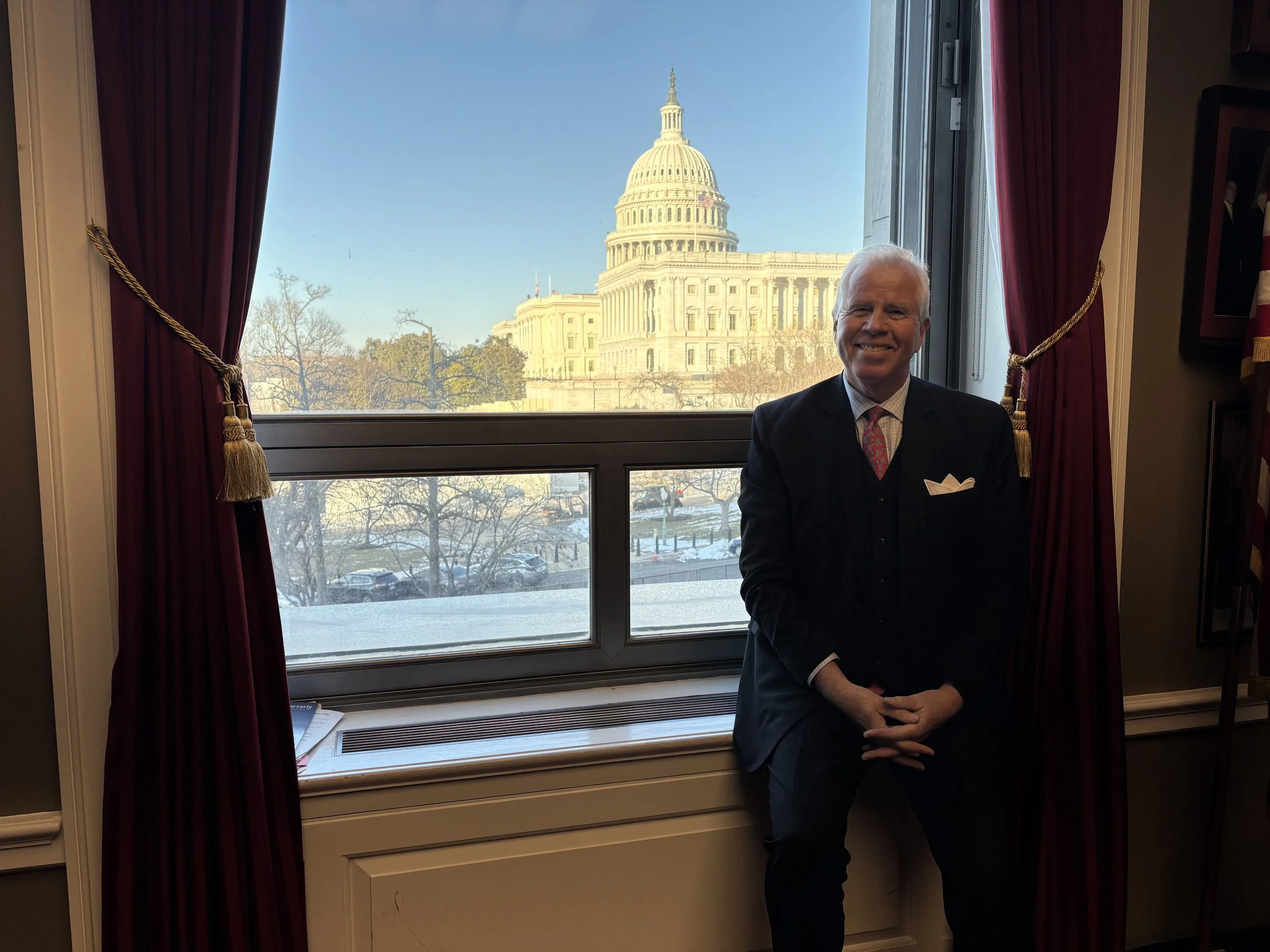
Corder: I was with Young Life the whole time and retired in 2020. I was overseeing all their international work. I've also been involved with the National Prayer Breakfast. I'm doing what I did at Redskins Park, going there two or three days a week, spending time. What I did at Redskins Park, I'm doing in the U.S. House of Representatives with the prayer breakfast group there. I'm just walking in, meeting folks, building friendships and trying to talk about Jesus. I do that a couple of days a week, but it's all voluntary. I'm very grateful we can do that. There is a full-time chaplain with the House, and I serve alongside and support them.